Introduction: The Growing Opportunity in the Smart Ring Market
Wearable technology is evolving rapidly, and smart rings are becoming an increasingly attractive product category for consumers and businesses worldwide.
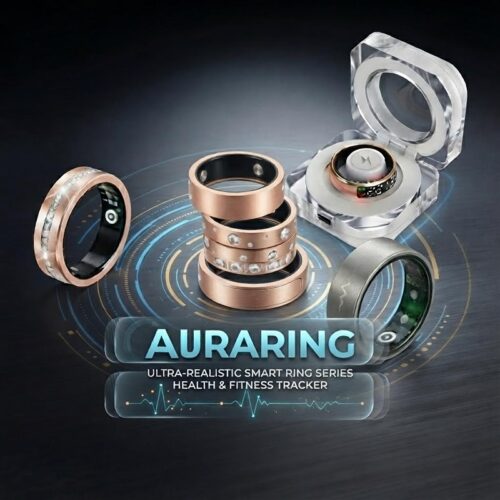
Unlike traditional smartwatches, smart rings offer a compact, lightweight, and discreet way to access wearable technology. Depending on the model, they can support health and fitness monitoring, sleep tracking, vibration notifications, activity tracking, and even AI-powered voice recording and translation.
For eyewear brands, electronics retailers, distributors, and emerging technology companies, smart rings represent an interesting opportunity to expand their product portfolios.
However, entering this market requires more than simply finding a supplier with attractive prices.
Choosing the right smart ring manufacturer can directly influence your product quality, customer satisfaction, business reputation, and long-term profitability.
So, what should you look for when selecting a smart ring manufacturing partner?
Here are eight important factors to consider.
1. Evaluate the Manufacturer’s Product Range
Not all smart rings offer the same features, technology, or user experience.
Some models focus on health and fitness monitoring, while others offer display functions, vibration notifications, or AI-powered capabilities.
A professional smart ring manufacturer should offer different product configurations to serve different market segments.
For example, consider these categories:
- Screenless Smart Rings: Minimalist designs focused on comfortable everyday wear, activity tracking, and vibration alerts.
- LED Display Smart Rings: Compact displays that provide visual information and additional interactive features.
- TFT Display Smart Rings: Models with color displays for a more visual and interactive user experience.
- AI Recording Smart Rings: Advanced products that support voice recording, AI transcription, and translation.
Before selecting a supplier, ask whether its product portfolio matches your target customers and intended retail positioning.
A diverse product range also gives distributors more opportunities to serve different customer groups.
2. Check Product Quality and Manufacturing Standards
Product quality is one of the most important factors in the smart ring business.
Because smart rings are worn directly on the finger throughout the day, they need to be designed for regular use.
Here are several areas worth evaluating:
Materials and Build Quality
Check the materials, surface finishing, structural design, and overall wearing comfort.
Water Resistance
Different smart rings have different water-resistance capabilities. Confirm the actual protection rating and test conditions rather than assuming all models offer the same protection.
Sensor Performance
For models with health and activity monitoring, evaluate the consistency and reliability of the collected data.
Battery Performance
Battery life is an important purchasing consideration. Ask about battery capacity, typical usage time, charging methods, and charging cycles.
Quality Control
A reliable manufacturer should have clear inspection procedures covering appearance, charging, connectivity, functional performance, and packaging.
Request product samples before making a large purchasing decision.
3. Understand the Smart Ring’s App Compatibility
A smart ring is not just a piece of hardware.
Its companion application plays an essential role in the overall user experience.
Before choosing a smart ring manufacturer, understand how the hardware communicates with its application.
Important questions include:
- Which mobile operating systems are supported?
- Is the companion app available on Google Play and the Apple App Store?
- What information can users access through the app?
- How does Bluetooth pairing work?
- Are firmware updates supported?
- Can the application support the functions your customers expect?
For businesses developing their own wearable technology ecosystem, hardware and software compatibility should be evaluated early.
A good product experience depends on both the physical device and the software behind it.
4. Compare Different Smart Ring Features
Do not choose a smart ring based on appearance alone.
Two products may look similar but offer completely different functions.
Depending on your target market, consider the following features:
FeatureWhy It MattersHealth MonitoringSupports everyday health-related data trackingSleep TrackingHelps users understand their sleep patternsActivity TrackingRecords daily movement and exercise informationVibration AlertsProvides discreet notifications and remindersLED DisplayOffers simple visual informationTFT DisplayProvides a more interactive visual experienceAI Voice RecordingSupports voice capture and recordingAI TranscriptionConverts recorded speech into textAI TranslationHelps with multilingual communication
Not every smart ring needs all these functions.
The best product is the one that matches your customers’ actual needs and your business positioning.
5. Consider Battery Life and Everyday Wearing Comfort
Smart rings are designed to be worn regularly, so comfort and battery performance should never be overlooked.
A ring that looks attractive but feels uncomfortable or requires frequent charging may result in poor customer feedback.
When evaluating a product, consider:
Size Options
Does the manufacturer provide multiple ring sizes? Are accurate sizing guides available?
Weight and Thickness
A lightweight design can improve the everyday wearing experience.
Charging Experience
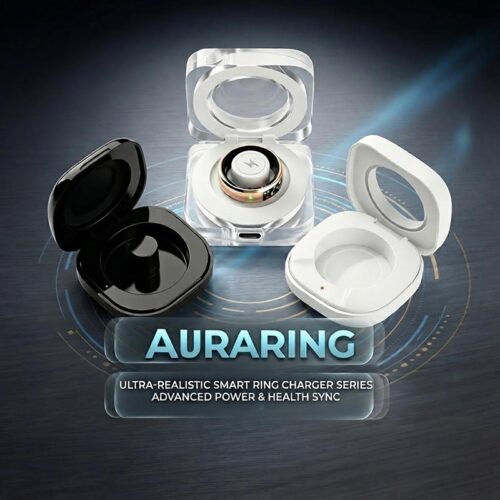
Check whether the product uses a charging case, magnetic charger, or another charging solution.
Battery Life
Ask for realistic battery performance under different usage conditions. Display functions, vibration alerts, and continuous monitoring may affect battery consumption.
These details can make a significant difference in customer satisfaction.
6. Evaluate the Manufacturer’s Communication and Technical Support
A good supplier should be more than a company that simply provides products.
Communication and technical support are especially important when you are introducing a new wearable technology category to your business.
Before cooperation, evaluate:
- How quickly does the supplier respond to technical questions?
- Can they provide detailed product specifications?
- Are user manuals and product instructions available?
- Can they explain product functions and limitations clearly?
- Can they assist with troubleshooting and after-sales questions?
- Do they understand international B2B business requirements?
Clear communication helps reduce misunderstandings and makes the cooperation process more efficient.
7. Understand MOQ, Pricing, and Supply Capabilities
Commercial terms are another important part of selecting a smart ring supplier.
Before placing an order, make sure you understand the following:
Minimum Order Quantity (MOQ)
Different models may have different minimum order requirements. Confirm the MOQ for each model separately.
Wholesale Pricing
Request quotations based on different order quantities so you can evaluate your purchasing costs.
Sample Availability
Testing samples before bulk purchasing is a practical way to evaluate product quality and functionality.
Production Lead Time
Confirm the estimated production schedule and shipping arrangements.
Product Availability
Ask whether the selected model is already in mass production or still in its development or testing stage.
A transparent supplier should communicate these details clearly before an order is confirmed.
8. Choose a Manufacturer That Understands Your Long-Term Business Goals
The smart ring market is developing, and customer expectations will continue to evolve.
Your supplier should understand that your business is not simply about purchasing one batch of products.
It is about building a product category that can grow over time.
Look for a manufacturer that can help you explore different product directions, understand technical specifications, and select suitable models for different customer groups.
For example:
- Electronics retailers may prefer versatile smart rings with practical everyday functions.
- Health and fitness retailers may focus on monitoring and activity-related features.
- Technology brands may be interested in AI-enabled recording and translation functions.
- Gift and lifestyle retailers may prefer elegant designs with simple interactive features.
Choosing the right product direction from the beginning can help you build a more competitive product portfolio.
Why Work with AISmart for Smart Ring Solutions?
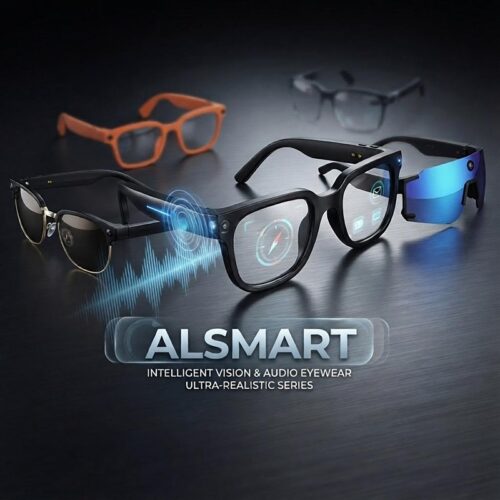
At AISmart Technology, we focus on smart wearable products, including smart glasses and smart rings.
We understand that different markets and business customers have different product requirements.
Our smart ring portfolio includes several configurations designed for different applications and customer preferences.
Explore Our Smart Ring Product Range
SY01 – LED Display Smart Ring
A smart ring featuring an LED display, vibration alerts, and multiple functional options. Vibration intensity can be adjusted to three levels: weak, medium, and strong.
SR16 – TFT Display Smart Ring
A smart ring featuring a TFT color display, vibration alerts, and 5ATM water resistance.
SY15 – Screenless Smart Ring
A minimalist smart ring without a display, featuring vibration alerts and everyday smart functions.
SR116 – AI Recording Smart Ring
An advanced smart ring supporting voice recording, AI transcription, translation, and health and exercise monitoring.
These different configurations allow businesses to explore various smart ring market segments.
Frequently Asked Questions About Choosing a Smart Ring Manufacturer
Q1: What is the difference between a smart ring manufacturer and a smart ring trading company?
A manufacturer is directly involved in product development or production, while a trading company primarily sources products from other suppliers. Understanding the actual production arrangement helps buyers evaluate product knowledge, quality management, and communication efficiency.
Q2: What should I check before ordering smart rings in bulk?
Request samples, confirm product specifications, test the companion app, check battery performance, verify available sizes, and understand the manufacturer’s quality control procedures.
Q3: Can smart rings support vibration notifications?
Yes. Some smart rings support vibration alerts for notifications, reminders, and other functions. However, availability depends on the specific model and configuration. Always confirm this feature before ordering.
Q4: Do all smart rings support health monitoring?
No. Features vary by model. Some focus on basic smart functions, while others include sensors for health and activity monitoring. Buyers should verify the actual specifications of each product.
Q5: How can I find a reliable smart ring wholesale supplier?
Compare product portfolios, technical specifications, quality control procedures, app compatibility, sample availability, pricing transparency, and communication support. Testing samples is strongly recommended before bulk purchasing.
Final Thoughts: Choose the Right Partner, Not Just the Right Product
Finding the right smart ring manufacturer is an important step toward building a successful wearable technology business.
Product quality, functionality, app compatibility, battery performance, commercial terms, and technical support all contribute to a successful partnership.
Rather than focusing on price alone, take the time to understand the manufacturer’s capabilities and find products that genuinely match your target market.
Looking for a reliable smart ring supplier for your business?
AISmart Technology welcomes inquiries from distributors, wholesalers, retailers, and businesses interested in smart wearable products.
Contact our team to explore our smart ring product range and discuss potential business cooperation.
#SmartRing #SmartRingManufacturer #WearableTechnology #SmartRingWholesale #B2B #SmartWearables #AISmart

 +86 13575128559
 dearsonethel@gmail.com
 +86 13575128559
 15675449128